Specialized Laundry Service
Washing Machine Repair & Drainage Diagnostics
Troubleshooting for spin cycle failures, standing water in the tub, severe balance shaking, door lock faults, and water leaks. Same Day Service, 24/7 Emergency Response, no hidden cost, and clean work nationwide.
Restoring Washer Spinning, Agitation & Drainage
Washing machines combine high-torque motor transmissions, heavy suspension dampeners, and pressurized water valves within a compact cabinet. When a drive belt snaps, a drain pump locks on a stray coin, or a tub bearing corrodes, cycles grind to a halt. Leaving standing soapy water trapped inside can damage control boards and saturate flooring if tub seals leak.
Our technicians test motor start windings, check pressure transducer sensor tubes, and dismantle pump housings to extract debris. On front-load washers displaying door lock errors, we test solenoid latches and align strike plates. For top-load units with stripped agitator dogs, we replace directional cam assemblies to restore vigorous wash action.
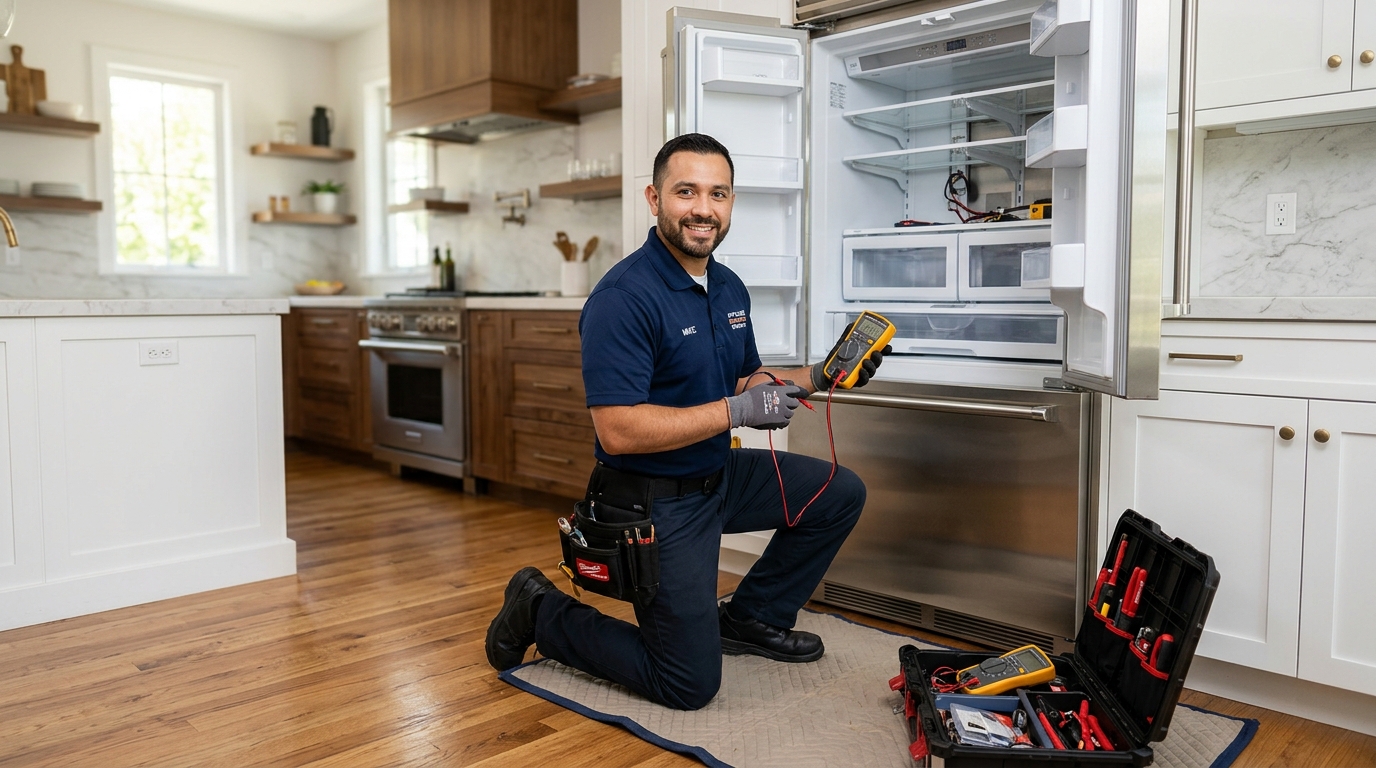
We perform clean work using floor runners to protect tile and hardwood. Every visit includes a complete fill, agitation, and high-speed spin cycle check to confirm balance before we leave.
-
✓
Drain Pump Blockage or Seizure
Foreign objects trapped in the pump housing prevent water expulsion.
-
✓
Rear Tub Bearing Failure
Water intrusion corrodes steel bearings, creating loud jet-engine roaring.
-
✓
Drive Motor Belt Breakage
Worn belts slip or snap, leaving the inner drum completely stationary.
-
✓
Suspension Rod Fatigue
Weakened springs cause violent cabinet shaking during high-speed spin cycles.
Frequently Asked Questions About Washing Machine Repair
Standing water in the drum almost always points to a blocked drain pump filter, a jammed impeller, or a failed pump motor. Small items like baby socks, coins, or hairpins frequently slip past the tub seal and wedge into the pump housing. Clearing the obstruction or replacing the drain pump restores normal cycling.
Extreme shaking occurs when suspension rods on top-load washers lose dampening tension, or when shock absorbers on front-load units leak hydraulic fluid. Unlevel leveling legs can also cause severe rocking. Replacing worn suspension assemblies stabilizes the drum during high-speed extraction.
A sound resembling a roaring jet engine during the spin cycle indicates that the tub seal has leaked water into the rear drum ball bearings. As the steel bearings corrode and pit, friction creates intense noise that worsens over time. Replacing the bearing and seal kit stops the noise and protects the tub.
If water fills normally but the drum remains still, common culprits include a snapped drive belt, a sheared motor coupling, or a broken lid switch / door latch sensor. The control board will not energize the drive motor if safety interlocks do not verify that the door is shut.
Leaks can originate from cracked water inlet mixing valves, split internal recirculation hoses, a punctured rubber door boot seal, or a cracked drain pump body. Technicians remove access panels and inspect connections under pressure to locate the exact leak source.
Yes. If the upper section of a dual-action agitator spins freely in both directions without gripping, the directional plastic cam teeth (agitator dogs) have worn out. Rebuilding the cam kit restores the downward ratcheting motion that pulls clothes into the wash stream.
Front-load washers will not unlock if the pressure switch detects water remaining in the tub, or if the bi-metal door lock solenoid overheats and binds. Technicians can manually trip the safety release, diagnose the drainage or solenoid failure, and replace the defective lock mechanism.
Yes. We service inverter-driven direct-drive washers and computerized smart models. Our technicians access internal diagnostic mode sequences, interpret manufacturer fault codes, and test circuit board voltage outputs to repair electronic controls accurately.