Specialized Cooking Service
Oven & Stove Repair — Gas and Electric Ranges
Troubleshooting for clicking gas igniters, blistered electric bake elements, inaccurate baking temperatures, and broken cooktop burners. We provide Same Day Service, 24/7 Emergency Response, no hidden cost, and clean work nationwide.
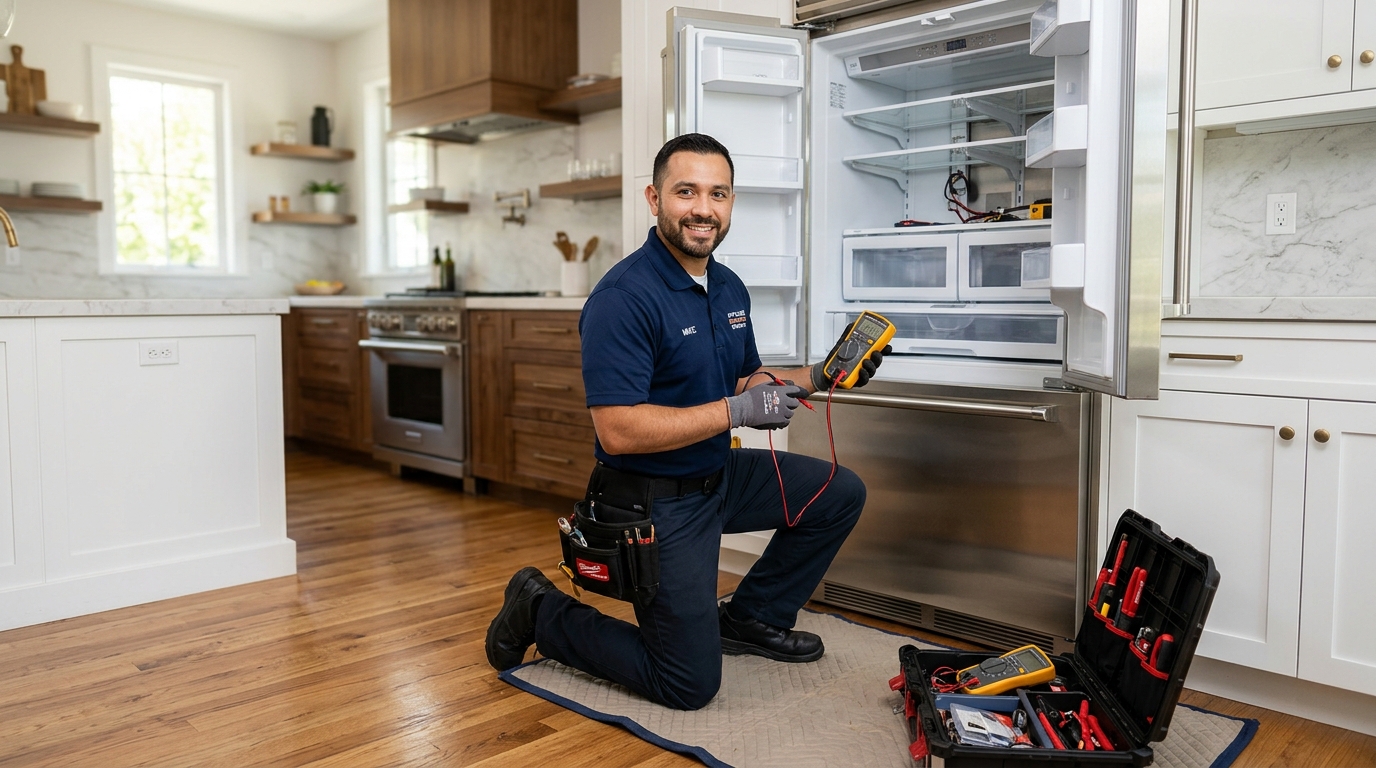
Restoring Precision Baking & Surface Cooking
Cooking appliances demand exact temperature calibration and robust electromechanical safety controls to prepare family meals safely. Gas ranges utilize flat silicon carbide igniters that must draw specific electrical amperage before bi-metal safety valves release gas. On electric ranges, 240-volt bake and broil elements suffer metal fatigue, and radiant glass cooktops fail when infinite heat regulators burn out.
Our technicians measure igniter amperage with clamp meters, test resistance across platinum RTD temperature sensor probes, and inspect high-voltage terminal wiring blocks. On cooktops with continuous clicking, we clean carbon from spark electrode bases and replace grounded rotary ignition switches.
Gas and electrical safety is our priority. We inspect gas supply connections with electronic sniffing tools, verify oven door gasket seals, and test motorized self-cleaning door locks before returning appliances to active service.
-
✓
Weak Gas Oven Igniters
Igniters that glow but draw under 3.2 amps will not open the gas safety valve.
-
✓
Blistered Electric Bake Elements
Internal nichrome wire breaks cause sparking, cracking, and total heat loss.
-
✓
Drifted Temperature Sensor Probes
Faulty RTD probes cause wild temperature swings and uneven baking results.
-
✓
Continuously Clicking Cooktop Spark
Moisture-fouled harness switches cause endless igniter clicking on stoves.
Frequently Asked Questions About Oven & Stove Repair
Gas oven igniters must draw between 3.2 and 3.6 amps to generate enough electrical resistance to open the bi-metal gas safety valve. As igniters age, their internal resistance increases and amp draw drops below the threshold needed to open the valve, even while the glow bar shines orange. Replacing the igniter restores immediate ignition.
Electric heating elements consist of a coiled resistance wire encased in insulating magnesium oxide inside a steel sheath. Thermal expansion and contraction over thousands of hours of baking eventually weaken the wire, creating a hotspot that sparks, blisters the outer sheath, and snaps. Installing a new OEM calrod element restores heat.
Continuous clicking happens when liquid from a boil-over penetrates the rotary burner knob switches, creating an unintended short circuit that trips the spark ignition module. A defective spark module or grounded wiring harness can also cause this. Cleaning moisture from the switches or replacing the switch harness stops the clicking.
Uneven baking occurs when the lower bake element burns out, forcing the upper broil element to carry the entire heating load, scorching food from above. Alternatively, a drifted temperature sensor probe (RTD) can misread cabinet heat, causing runaway temperature spikes. Technicians test element continuity and recalibrate the thermostat.
Yes. Individual radiant heating elements underneath the ceramic glass can be replaced independently if they fail to heat. If the tempered ceramic glass itself is cracked or shattered, the complete glass assembly must be replaced to prevent electrical shock and moisture intrusion.
Self-cleaning cycles reach temperatures exceeding 900 degrees, activating a motorized door lock. If the thermal safety thermostat trips or the lock motor switch binds during cool-down, the door remains trapped. Our technicians manually release the safety latch, test high-limit thermal fuses, and replace broken lock motor assemblies.
Convection fan failures stem from a seized fan motor bearing, a broken door switch that falsely reports the door is open, or a failed relay on the electronic oven control board. Technicians test voltage to the fan motor terminals and verify free impeller rotation.
Yes. Our technicians service high-output luxury ranges, including Wolf, Thermador, Viking, and Dacor, as well as standard residential models. We are trained on dual-stacked burners, heavy-duty gas regulators, and electronic convection systems.