Specialized Laundry Service
Dryer Repair & Heating Diagnostics
Troubleshooting for clothes taking multiple cycles to dry, cold tumbling, loud squealing noises, and blown thermal safety fuses. We provide Same Day Service, 24/7 Emergency Response, no hidden cost, and clean work nationwide.
Restoring Dryer Airflow, Heat & Rotation
Dryers rely on high-volume airflow and sustained thermal energy to evaporate moisture from clothing. When internal lint dams block ductwork, temperatures skyrocket and trip non-resettable thermal cut-off fuses. On electric dryers, heavy coiled heating elements snap under thermal expansion fatigue, while gas dryers fail when split-coil solenoids refuse to open fuel valves.
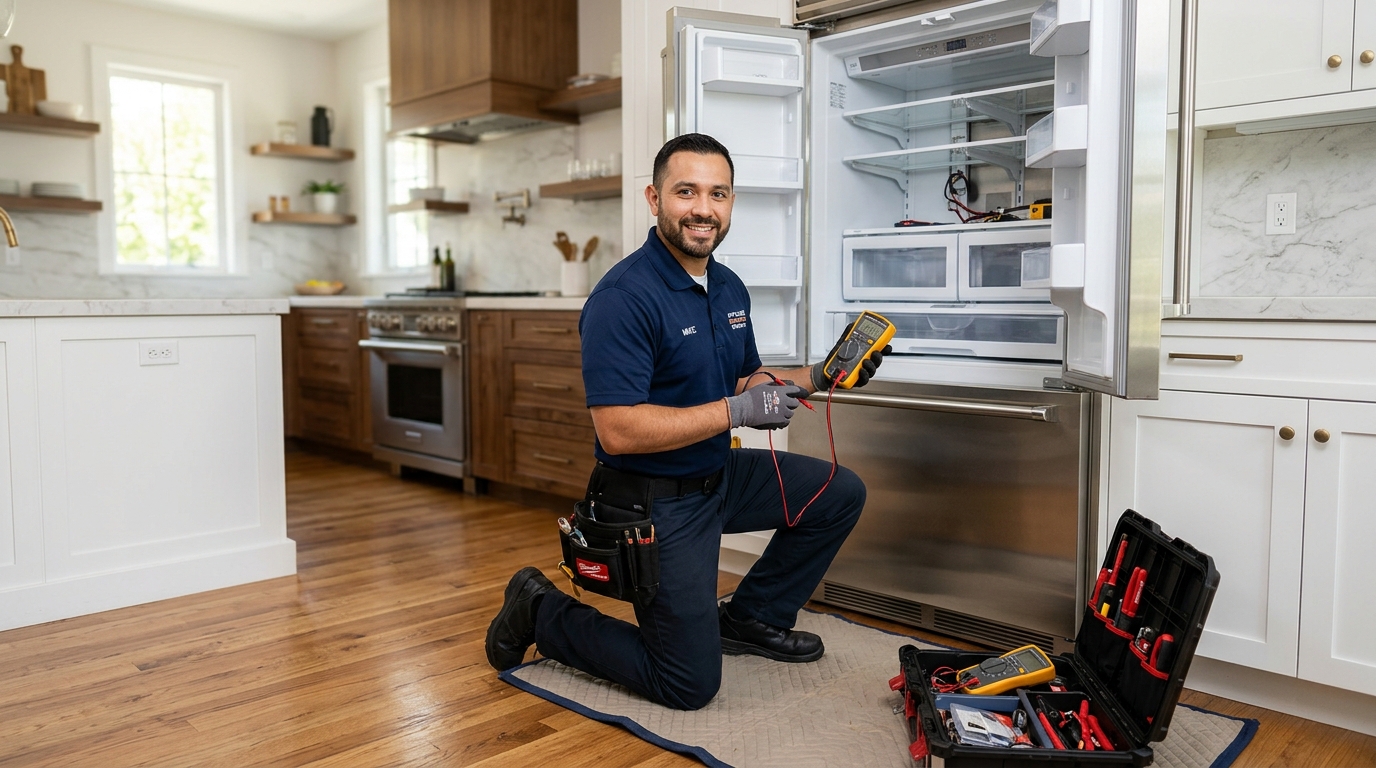
Our technicians measure resistance across high-limit thermostats, test moisture sensor strips, and dismantle blower housings to clean fan impellers. We inspect drum support rollers, replace squeaking idler pulleys, and install heavy-duty drive belts to ensure smooth, quiet tumbling.
Fire safety is our highest priority. We clean internal cabinet lint passages, verify proper exhaust backpressure, and inspect gas pipe connections with electronic detectors before testing full cycle operation.
-
✓
Open-Circuit Heating Element
Broken resistance coils leave electric dryers tumbling completely cold.
-
✓
Blown Thermal Cut-Off Fuse
Restricted exhaust vents trigger safety cutoffs that kill heat or power.
-
✓
Seized Drum Support Rollers
Worn axle shafts cause loud metal-on-metal squealing and drum drag.
-
✓
Gas Valve Solenoid Failure
Weak split coils prevent burner tubes from lighting despite igniter glow.
Frequently Asked Questions About Dryer Repair
Zero heat on an electric dryer usually points to a broken heating element coil, a tripped high-limit thermal fuse, or a failed cycling thermostat. Nichrome heating coils expand under intense heat and eventually break with age. Our technicians measure continuity across the heating loop to identify the exact failed part.
A glowing flat igniter indicates that the ignition circuit is active, but the gas valve coils (split coils) have become too weak to pull the internal safety plunger open. When the coils heat up, their internal copper windings break continuity. Installing a fresh coil set allows gas to flow and ignite immediately.
High-pitched squeaking stems from worn drum support roller bearings running dry on steel shafts, or an idler tension pulley binding up. Thumping sounds indicate that rubber rollers have worn flat spots or that the drum seam is catching. Replacing the complete roller and belt maintenance kit silences the dryer.
Extended drying times are almost always caused by restricted exhaust ventilation. When lint chokes the exhaust duct or outdoor hood flapper, moist air cannot escape the drum, preventing clothes from drying and trapping dangerous heat inside the cabinet. Cleaning the vent system and testing operating thermostats solves this.
Sudden shutdowns mid-cycle indicate that the drive motor is overheating. When lint packs into motor windings or drum bearings bind, the motor draws excess current and trips its internal thermal overload protector. After cooling down for twenty minutes, it will restart. Replacing the drive assembly or cleaning motor airways fixes this.
If the motor hums when you push start but the drum does not rotate, the drum drive belt has snapped or jumped off the motor pulley. A broken belt trips an idler safety switch on modern dryers, cutting power to prevent motor burnout. Installing a new heavy-duty drive belt restores drum rotation.
Yes. The door switch acts as an essential safety disconnect. If the plastic switch lever breaks or internal contacts burn, the control circuit believes the door is still open and will not energize the drive motor. Replacing the door microswitch takes minimal time and restores operation.
Yes. Whenever we open a dryer cabinet to replace a heating element, roller, or belt, we vacuum out accumulated lint from around the motor, blower wheel, and burner tube. This clean work practice reduces home fire hazards and extends the lifespan of the new parts.